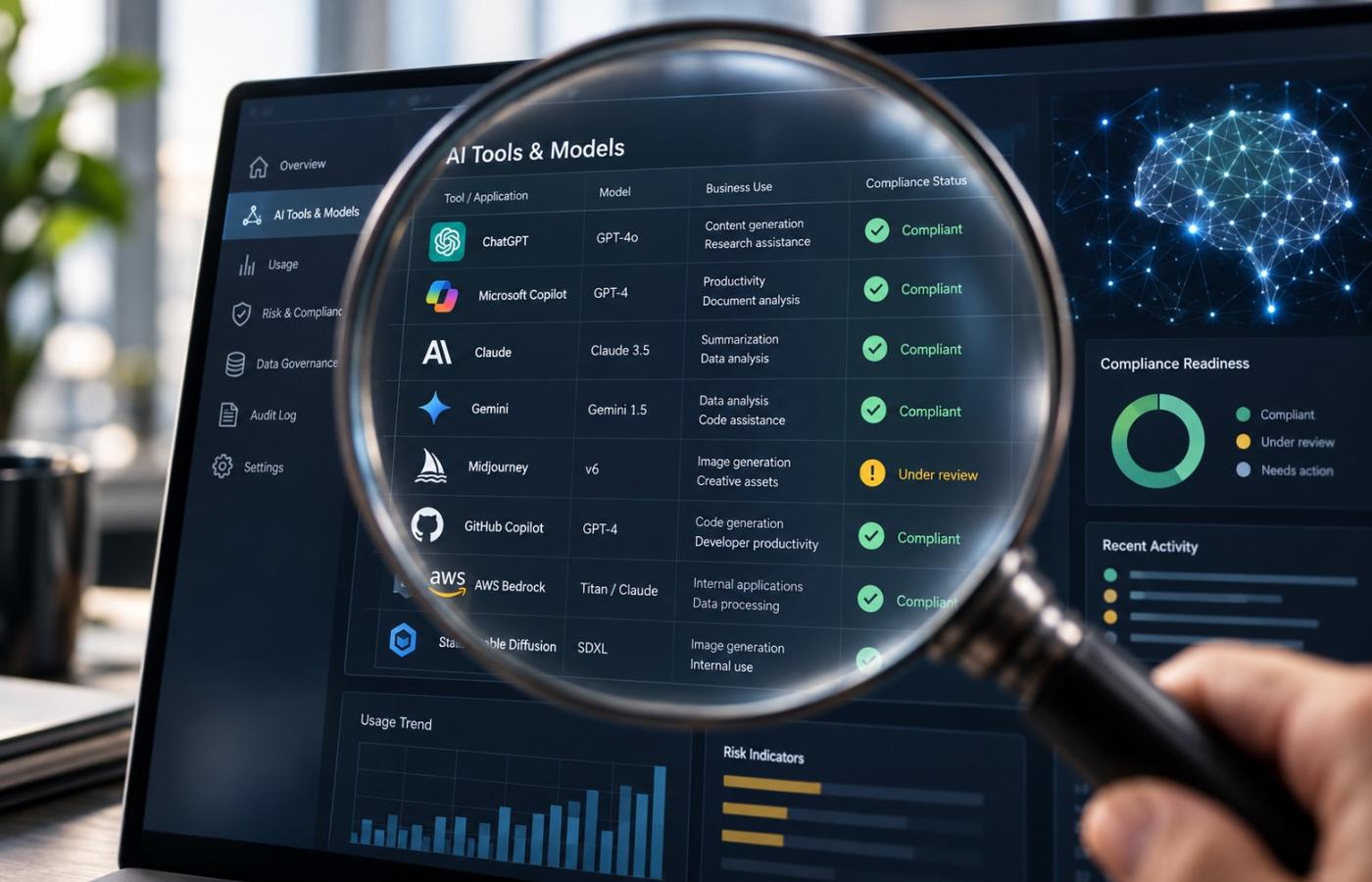
Specialized AI Tools: Custom Solutions Built for Your Business
tl;dr
- Specialized AI tools outperform general chatbots: Purpose-built applications deliver measurably better results for specific business functions like writing enhancement, meeting management, and customer support
- Two creation paths exist: Build dedicated SaaS applications or create custom solutions through platforms like OpenAI's GPT Store
- Custom solutions use three key components: Tailored instructions, uploaded knowledge bases, and API connections enable real-world business actions
- Quality control varies by platform: Automated checks, manual reviews, and user reporting systems maintain marketplace standards
- Strategic advantage comes from knowing when to specialize: Understanding when focused tools beat general AI determines competitive positioning
In our previous article, we explored how large language models like GPT-4 and Claude power virtually every AI application. These foundational models provide broad intelligence and remarkable versatility, but that versatility comes with a tradeoff. While general AI tools provide helpful responses across countless topics, specialized AI applications deliver measurable business outcomes that transform departmental productivity.
Customer service teams need responses that follow company policies. Marketing departments require content that matches brand voice guidelines. Sales professionals want meeting summaries that highlight deal-advancing opportunities. This is where specialized AI tools excel—taking the broad intelligence of foundational LLMs and focusing it through targeted training, custom knowledge, and purpose-built interfaces.
The Specialization Advantage: Why Focused Beats General
The difference between general and specialized AI mirrors hiring a general consultant versus bringing in an expert. Ask ChatGPT to help with customer service emails, and it provides helpful but generic responses. Use a specialized tool trained on your company's knowledge bases, policies, and successful interactions, and it delivers responses that sound like they came from your best support representative.
Measurable Performance Differences
The data supports specialization for business outcomes that rely on shared internal knowledge. Cushman & Wakefield's research organization was overloaded with manually preparing over 1,700 reports per year totaling over 10,000 hours1. When the firm implemented specialized AI for content creation, tasks like generating taglines and website copy were streamlined by 50%, allowing copywriters to focus on strategic work.
Specialized tools address three fundamental limitations of general-purpose AI:
Context Persistence: General chatbots start fresh with each conversation or have limited memory. Specialized tools maintain context about business operations, brand voice, previous decisions, and ongoing projects.
Domain Knowledge: While GPT-4 knows general information, a specialized legal AI tool trained on contract law and company-specific preferences provides more accurate, actionable advice. The difference lies in focused application of intelligence to specific domains.
Integration Capabilities: Specialized tools connect directly with existing business systems, CRM platforms, email tools, project management software like enabling automated workflows that general chatbots cannot achieve.
Traditional SaaS Specialized Tools: Professional-Grade Solutions
The first wave of specialized AI tools emerged from established software companies that integrated AI capabilities into focused business applications. These represent the "traditional" path to specialization: purpose-built software designed for specific industries and functions.
Writing and Communication Enhancement
Grammarly evolved from basic grammar checking into comprehensive business communication assistance. A global business process outsourcing company using Grammarly Business saw a 12% reduction in contacts per support ticket, indicating customer support agents were better able to solve issues on the first attempt2. The platform adjusts tone, improves clarity, and maintains brand voice consistency which are capabilities that matter where written communication directly impacts business outcomes.
Marketing content platforms like Jasper demonstrate specialization in a different domain. Rather than requiring marketers to engineer prompts for general AI, marketing-specific platforms embed domain logic: maintaining brand voice across content types, automating campaign workflows, and integrating directly with marketing systems.
Meeting Intelligence and Productivity
Every organization struggles with the same meeting challenge: valuable discussions generate insights and decisions that get lost in the transition from conversation to action. Tools like Fireflies demonstrate specialization advantages over general transcription. Rather than simply converting speech to text, specialized meeting intelligence platforms extract action items, identify decision points, and create searchable archives. Fireflies transcribes meetings across multiple platforms and provides AI-powered search capabilities to review content efficiently3.
Otter.ai and Avoma provide similar meeting intelligence capabilities, each with unique strengths. These tools succeed because they're designed specifically for meeting workflows rather than adapted from general conversation AI.
Industry-Specific Applications
Beyond horizontal business functions, specialized tools address specific industry needs:
Legal: Contract analysis tools trained on legal language and precedents provide insights general AI tools miss.
Healthcare: Clinical documentation assistants understand medical terminology and compliance requirements.
Finance: Financial analysis tools integrate with accounting systems and understand regulatory requirements.
Real Estate: Property description generators know market terminology and local regulations.
The pattern is consistent: specialization delivers value when domain knowledge, regulatory requirements, or industry-specific workflows create complexity that general AI cannot effectively address.
The GPT Store Revolution: Democratizing AI Specialization
While traditional SaaS companies build specialized AI tools through significant engineering investments, OpenAI's GPT Store has democratized this process. Understanding how this democratization works reveals why it matters for business strategy. Organizations can now create specialized AI solutions in hours rather than months, testing business-specific use cases before committing to traditional software investments.
More than 3 million custom GPTs have been created, with the GPT Store currently containing 159,000 public GPTs available for use4.
How Custom GPTs Work
Custom GPTs transform general-purpose ChatGPT into specialized tools through three key components:
Custom Instructions: Detailed prompts define the GPT's purpose, personality, tone, and rules of engagement. These instructions tell the model how to behave for particular use cases, whether acting as a coding assistant, writing coach, or financial analyst.
Knowledge Base: Teams upload specific files (PDFs, company FAQs, research papers) that the GPT references when generating responses. This allows responses based on information not in the model's training data: company processes, industry regulations, or proprietary research.
Actions: The most advanced feature, allowing GPTs to connect to external APIs for real-world functionality. A custom GPT could retrieve live data from business systems, trigger workflows, or update records across platforms.
Quality Control and Vetting
OpenAI maintains quality standards through automated policy checks that review GPTs for compliance, manual review by safety teams for flagged content, and user reporting systems. While creators bear ultimate responsibility, this vetting process maintains marketplace standards. OpenAI reserves the right to remove any GPT for policy violations5.
Business Applications of Custom GPTs
As discussed, organizations are using custom GPTs for increasingly sophisticated functions:
Internal Knowledge Management: Companies create GPTs trained on employee handbooks and process documentation, providing 24/7 access to institutional knowledge.
Customer Support Enhancement: Custom GPTs trained on product documentation and support history provide consistent, accurate responses while maintaining brand voice.
Industry-Specific Analysis: Consulting firms create GPTs specialized in particular sectors, combining public industry knowledge with proprietary research.
Training and Onboarding: Organizations build GPTs that guide new users through complex processes, providing personalized instruction in real-time.
Strategic Selection: Choosing the Right Approach
Organizations don't face an either-or decision between traditional SaaS tools and custom GPTs. Each approach serves different needs.
Choose Traditional SaaS Tools When:
- Integration with existing business systems is critical
- Enterprise security and compliance requirements are non-negotiable
- Advanced analytics and reporting capabilities are needed
- Multiple team members require structured collaboration features
- Budget allows for dedicated specialized software
- Vendor support and guaranteed uptime matter for continuity
Choose Custom GPTs When:
- Rapid deployment and iteration are priorities
- Customization for specific knowledge domains is required
- Budget constraints favor lower-cost solutions
- Internal knowledge needs to be embedded in the AI
- Experimental or proof-of-concept applications are being developed
- Flexibility to modify and iterate quickly provides competitive advantage
Implementation Strategy: Getting Started with Specialized AI
Rather than attempting to specialize every AI interaction immediately, successful organizations follow a strategic implementation path.
Phase 1: Identify High-Impact Use Cases
Begin with business functions where AI specialization delivers clear, measurable benefits:
Repetitive Content Creation: Marketing copy, email responses, documentation that follows consistent patterns.
Information Processing: Meeting summaries, document analysis, research synthesis where domain knowledge improves accuracy.
Customer-Facing Communications: Support responses, sales outreach, educational content where brand consistency matters.
Phase 2: Evaluate Build vs. Buy Decisions
Assess whether existing specialized tools meet needs or whether custom development provides better value. Favor existing tools when established solutions exist with strong user bases. Consider custom development when specific requirements, knowledge bases, or workflow processes differentiate significantly from standard practices.
Phase 3: Pilot and Measure
Implement specialized AI tools in controlled environments with clear success metrics:
Productivity Metrics: Time savings, task completion rates, quality improvements
Business Metrics: Customer satisfaction, conversion rates, cost reduction
Adoption Metrics: User engagement, feature utilization, training requirements
What's Next?
Specialized AI tools represent just one layer of the AI business ecosystem. These purpose-built solutions often integrate with existing business platforms, adding AI capabilities to familiar tools rather than requiring entirely new software adoption.
In our next article, we'll explore how established business platforms like Notion, Airtable, and Google Workspace are integrating AI capabilities directly into their existing workflows. You'll discover how these AI enhancements improve productivity in tools teams already know, and why this integration approach often succeeds where standalone AI tools struggle to gain adoption.
Final Thoughts
Specialized AI tools deliver superior results for specific business functions by combining the broad intelligence of large language models with targeted training, custom knowledge, and purpose-built interfaces. Whether through traditional SaaS applications or democratized creation via platforms like the GPT Store, specialization allows AI to move beyond general helpfulness to become genuinely indispensable for particular business needs.
The competitive advantage lies not in choosing between general and specialized AI, but in understanding when each approach serves business objectives most effectively. Organizations that master this strategic selection build AI capabilities that differentiate them in the marketplace, not by using the newest tools, but by applying the right tools to the right problems.
References
- How AI-powered content gives Cushman & Wakefield a competitive edge — Jasper AI
- How a Global BPO Improved Customer Satisfaction by 17% With Grammarly Business — Grammarly Business
- Fireflies.ai | AI notetaker to transcribe, summarize analyze meetings — Fireflies AI
- GPT Store Statistics & Facts: Contains 159,000 of the 3 million created GPTs — SEO.ai
- Introducing the GPT Store — OpenAI
Continue exploring our AI Business Guide series:
- AI: Understanding Large Language Models
- Specialized AI Tools: Custom Solutions Built for Your Business (this article)
- AI-Enhanced Business Platforms: Supercharging the Tools You Already Use
- No-Code AI Automation: Building Powerful Workflows Without Programming
- AI-Powered Coding Tools: Professional Development Accelerated by AI